
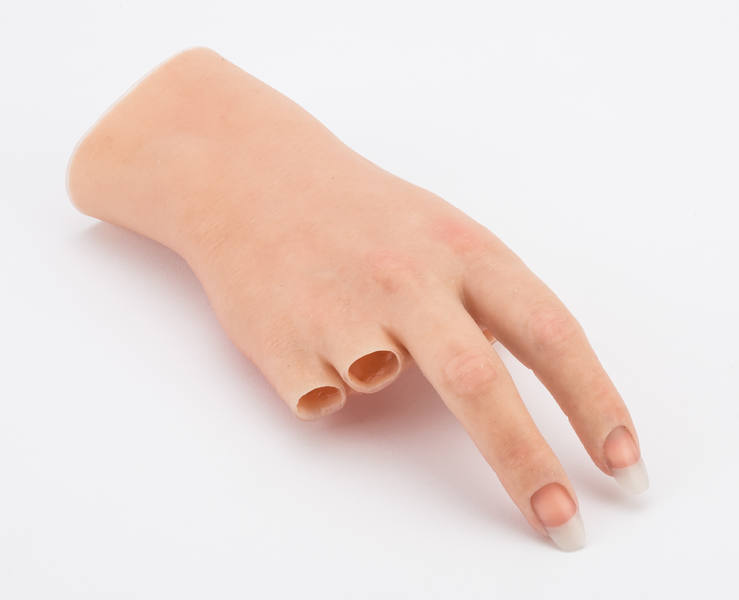
1. Character
A prosthesis should be similar in character to the existing fingers. Look closely at your real skin: the precise shape to each finger, the lines under each knuckle, and the way that fingerprints go all the way down (not just the tips). Fingernails should be natural to the individual.
2. Color
A finger usually has color variation throughout its length. Whether this means a rosier color tone towards the tips, or a blotchy look to the palm-side skin, each finger is detailed and unique. Look for a prosthesis that is designed to identify and imitate these details.
3. Fit
To best fit the residual limb, a prosthesis should be custom made. The inside of the prosthesis will be created to fit directly onto a specific and individual residuum. This will help the prosthesis stay on properly, and will also protect the flesh underneath even as it helps to restore the finger’s function.
4. Durability
Prostheses made with inexpensive silicone will tear and quickly be rendered useless. Prostheses created out of medical grade silicone are stronger, and prevent the skin from becoming irritated. This also allows the prosthesis to be stable in shape and size.
Details Matter.
…Dermatos® prostheses by Alatheia boast top-of-the-line results for each of the four categories listed above.
- Character: Custom sculpting gives each prosthesis elements of character that help it to “blend in”. Crafted fingernails give each finger its “signature.”
- Color: Attention to detail in painting colors lets the prosthesis reflect what makes your . finger unique.
- Fit: Custom fitting for efficient function and necessary protection.
- Durability: Durable silicone painted from the inside to reduce wear and tear…all under warranty.
Alatheia gets referrals from Doctors, Nurses, Therapists and Prosthetists worldwide because they know our reputation for quality and patient satisfaction.
Get started today by completing our Online Info Form, and see what a difference we can make.


