
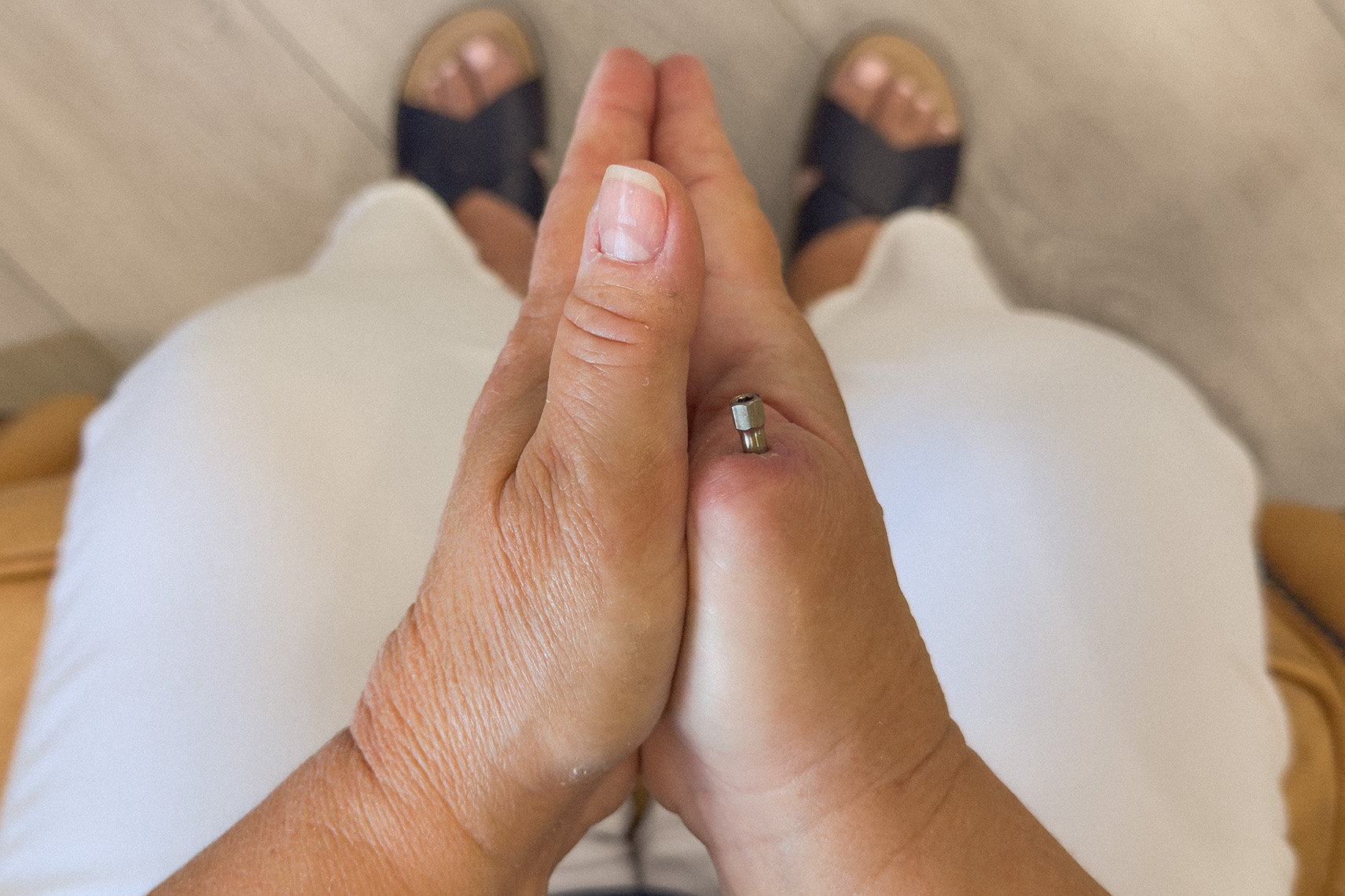
You don’t realize how much you rely on your thumb until it’s gone. It’s not a dramatic realization at first — it’s the small, maddening moments. Struggling to open a jar. Fumbling with a button while someone waits on you. Dropping your keys because there’s nothing left to hold them against. Watching your other hand quietly take over tasks it was never built to do alone, until it starts to ache from carrying a job that used to be shared. If you’ve lost a thumb, or you’re caring for someone who has, you already know that this isn’t just about appearance. It’s about independence, it’s about the quiet frustration of asking for help with things you never had to ask for before, and it’s about grieving a part of yourself that showed up for you every single day without you ever having to think about it — until suddenly, you have to think about nothing else.
If you’ve been searching “prosthetic thumb,” “thumb prosthesis,” or “prosthetic thumb cost,” you’re likely looking for something more than a product listing — you want to know if your life can feel functional and confident again. It can. This guide walks through exactly what a modern prosthetic thumb offers, how it works, and what the road back to feeling like yourself actually looks like.
What Is a Prosthetic Thumb, Exactly?
A thumb prosthesis is a custom-made replacement for a thumb that’s been lost to injury, illness, surgery, or a congenital difference. Unlike the other fingers, the thumb isn’t just another digit — it’s the anchor of your entire hand’s ability to grip, pinch, and manipulate objects, made up of its own set of joints and a wider range of motion that lets it “oppose” the rest of your fingers. That’s exactly why losing it feels so disproportionately difficult, and why a well-designed prosthesis matters so much.
Modern thumb prosthetics generally fall into a few categories:
- Passive (silicone) thumb prosthetics — custom-molded, hand-painted silicone devices built to closely match your natural skin tone, shape, and nail detail. They restore appearance and provide meaningful support for stabilizing, pinching, and light gripping.
- Body-powered thumb prosthetics — mechanical devices that use cables connected to movement elsewhere in your hand or wrist to actively bend and grip, offering more active function without batteries or electronics.
- Myoelectric (robotic) thumb prosthetics — devices that use sensors to read muscle signals from your residual limb and translate them into motorized movement, providing the most active function at the cost of more visible hardware and maintenance.
For many people, what matters isn’t the technology on paper — it’s whether they can hold a coffee cup one-handed again, sign their name without frustration, or shake someone’s hand without flinching inside. A custom silicone thumb is often the starting point for exactly that kind of quiet, daily relief.
Why the Thumb Loss Hits Differently
If you’ve found yourself surprised by how much harder daily life became after losing just one digit, you’re not imagining it. The thumb is responsible for a disproportionate share of your hand’s overall function compared to any single finger — grip, pinch, and stability all rely heavily on the opposition your thumb provides. That’s why so many people describe thumb loss as feeling less like losing “a finger” and more like losing the use of an entire hand. Common causes include:
- Workplace and machinery accidents — a leading cause of thumb amputation, often happening in an instant during ordinary work.
- Motorcycle and vehicle accidents — thumb injuries are common in crashes and falls.
- Severe infections — sometimes requiring amputation to protect the rest of the hand, an outcome that can feel sudden and unfair.
- Vascular disease and diabetes complications — progressive circulation issues that eventually take away function a person always counted on.
- Congenital thumb differences — some people are born without a fully formed thumb, and after years of adapting, decide they want more function or a different appearance later in life.
Whatever path brought you here, it’s okay to feel frustrated, grieved, or simply exhausted by how much has changed. Those feelings are valid — and they’re also exactly why so many people find real relief once they finally explore their options instead of continuing to adapt in silence.
Can a Prosthetic Thumb Actually Restore Grip?
Yes — and for many wearers, this is the moment everything shifts. A well-fitted prosthetic thumb restores the opposable surface your fingers press against, which dramatically improves your ability to pick up objects, hold utensils, button clothing, type, and manage the dozens of small tasks that quietly define independence. It won’t replicate every bit of natural joint movement, but for the overwhelming majority of daily life, patients describe a genuine, meaningful return of function — paired with something just as important: the emotional relief of a hand that finally looks and feels whole again.
How Realistic Does a Prosthetic Thumb Look?
This question comes up in nearly every consultation, and it usually isn’t asked out of curiosity — it’s asked out of hope. The honest answer is that a properly custom-built prosthetic thumb can be remarkably difficult to distinguish from a natural one. That realism is the result of a careful, hands-on process:
- A detailed mold is taken directly from your hand to capture the exact size, angle, and shape needed.
- Medical-grade silicone is layered and hand-painted to match your specific skin tone, including the natural variation across your knuckles and palm.
- Fine details like veining, knuckle creases, and fingerprint-like texture are sculpted in by hand.
- The fingernail is shaped and finished to match the rest of your hand, right down to natural shine and curve.
Patients regularly tell us that family members, coworkers, and even close friends didn’t notice the prosthesis until they were told directly. For many, that’s the moment the grief starts to loosen its grip.
How Is a Prosthetic Thumb Attached?
A common worry we hear is that a prosthesis might slip, shift, or fall off during everyday activities. In reality, a properly custom-fitted thumb prosthesis attaches securely by suction, molded so precisely to your residual anatomy that it creates a reliable seal without straps, harnesses, or adhesives. You deserve to go through your day without constantly wondering if your hand is going to stay together — and with the right custom fit, you won’t have to.
What the Process Actually Looks Like
Not knowing what to expect can be one of the hardest parts of moving forward, so here’s exactly what the journey looks like, step by step:
- Free consultation — a specialist listens first, taking time to understand your anatomy, your daily life, your concerns, and your goals, with zero pressure and zero obligation.
- Custom molding — a detailed impression is taken to capture the precise shape and angle needed for a secure, comfortable, natural-feeling fit.
- Sculpting and color matching — your prosthesis is hand-built and painted in layers to match your unique skin tone and hand detail.
- Fitting and functional testing — the finished device is checked for comfort, secure attachment, and everyday grip support, with adjustments made until it feels right.
- Care and maintenance guidance — you’ll leave with simple, clear instructions to keep your prosthesis performing well for years to come.
Because Finger Prosthetics serves the entire United States, this process can happen wherever feels most comfortable for you. You’re welcome to visit one of our locations, or in many cases, a specialist can come directly to your doorstep — because getting your independence back shouldn’t depend on how far you live from a clinic.
What About Prosthetic Thumb Cost?
If “prosthetic thumb cost” is one of the phrases that brought you here, we understand completely — you’re already navigating so much, and worrying about money on top of everything else you’re feeling isn’t fair. So let’s be straightforward: we’re not going to hand you a generic number pulled from a national average that has nothing to do with your hand, your insurance, or your life. The truth is, pricing depends on real, personal factors — the type of prosthesis, the complexity of your residual thumb, and what your specific insurance plan covers — and any flat number you find online is really just a guess wearing the costume of an answer.
What we can offer instead is something more honest: a free, no-obligation consultation where a specialist reviews your exact situation and, in many cases, contacts your insurance provider directly on your behalf, so you know precisely where you stand before you commit to anything. You’ve already carried enough uncertainty. Let us take the guesswork off your plate.
Who Is a Good Candidate for a Prosthetic Thumb?
Most people who have lost part or all of a thumb are candidates, regardless of how the amputation happened or how long ago it occurred — even if you’ve spent years assuming there wasn’t a good option available to you. Residual thumbs that are short, sensitive, or irregularly shaped can typically still be accommodated with the right custom design, and in many cases, a well-fitted prosthesis actually reduces pain by protecting a sensitive residual limb from everyday friction and overuse. The only way to know for certain is a caring, honest evaluation with a specialist who’s willing to answer every question you have.
Getting Started
If you’ve been putting off this conversation because it felt overwhelming, or because you weren’t sure anything could really help, let this be the moment that changes. You don’t need to have it all figured out — you just need to take the first step. Finger Prosthetics proudly serves patients across the entire USA, meeting you at your home, your doctor’s office, or one of our clinics, on your terms and at your own pace.
Frequently Asked Questions
What is a prosthetic thumb made of?
Most custom prosthetic thumbs are made from medical-grade silicone, chosen for its ability to closely replicate the color, translucency, and feel of natural skin while remaining comfortable and durable for daily wear.
How does a prosthetic thumb restore grip?
By recreating the opposable surface your fingers press against, a well-fitted prosthetic thumb allows you to pinch, stabilize, and grip objects in a way that closely mirrors natural hand function for most everyday tasks.
Does insurance cover prosthetic thumbs?
Coverage varies by plan, but many major insurance providers, Medicare, Medicaid, and Veterans Affairs benefits offer some level of coverage for medically necessary prosthetic devices. A specialist can walk you through your specific situation — book your free consultation for full details.
Can you feel anything with a prosthetic thumb?
While a silicone prosthetic thumb doesn’t restore biological sensation, many wearers describe a proprioceptive effect, where pressure and vibration transfer through the device to the residual limb, making it feel like a genuine part of the hand.
How long does a prosthetic thumb last?
With proper care, most prosthetic thumbs last several years before needing refinishing or replacement, depending on daily use. Regular check-ins help extend their life and keep them looking their best.
Can a prosthetic thumb be repaired or adjusted later?
Yes. Minor repairs, refinishing, and adjustments are common and can meaningfully extend the life of your prosthesis, so you’re never starting completely over.
How soon after amputation can I be fitted for a prosthetic thumb?
Timing depends on how well the residual area has healed. A specialist will gently evaluate your situation during a free consultation and let you know when you’re ready to move forward.
Will people notice I’m wearing a prosthetic thumb?
Most patients find that, thanks to detailed color-matching and hand-sculpting, others don’t notice unless they’re told directly — a quiet confidence many describe as life-changing.
Do I need a referral from a doctor to get started?
No — any physician aware of your condition can provide the documentation needed. An initial consultation with a specialist doesn’t require a referral at all.
You don’t have to keep adapting around what’s missing. For more information, book your appointment now — schedule your free consultation. You’re welcome to visit one of our locations, or we can come to your doorstep — we proudly serve patients across the entire USA, wherever you are. Call (800) 670-9550 to speak with a specialist who genuinely wants to help.