
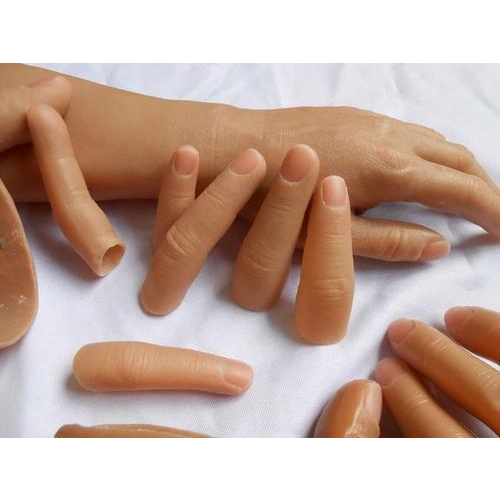
Of all the questions people carry quietly into their first consultation, this might be the most tender one: will I ever really feel anything again? Not just see a finger that looks like yours, but actually sense the world through it. The warmth of a coffee mug. The pressure of a handshake. The soft weight of someone else’s hand in yours. For many people adjusting to life after losing a finger, this question isn’t really about biology, it’s about connection. It’s about whether your hand can still feel like you.
The honest, hopeful answer is: yes, in a real and meaningful way, many people do.
How Sensation Works With a Finger Prosthesis
A finger prosthesis doesn’t restore nerve endings the way your original finger had them. What it can do, remarkably well, is transfer sensation through itself to the nerve endings that remain in your residual finger. Think of it less like a replacement and more like a conductor. Touch, light pressure, and even temperature can travel through the material of the prosthesis to reach the sensitive tissue still present beneath it.
This is one of the reasons silicone finger prosthetics have become the preferred material for so many patients. Silicone is soft, thin enough to transmit subtle pressure, and flexible enough to move naturally as you touch, tap, or grip something. Many wearers describe tapping their prosthetic finger on a table and genuinely feeling that tap register, not identical to before, but present, real, and reassuring.
Why This Matters More Than People Expect
It’s easy to assume sensation is a “nice bonus” on top of appearance. In practice, for many amputees, it’s often the emotional turning point. Losing the ability to feel through a finger can feel like losing a small, constant thread of connection to the world. Regaining even a partial version of that thread, being able to feel your child’s hand, the texture of a fabric, the warmth of a cup, can be genuinely moving.
We’ve watched patients tap their new finger for the first time, pause, and quietly say, “I can feel that.” That moment doesn’t happen because of clever marketing. It happens because a well-crafted custom finger prosthetics solution is designed, from the very first impression, around your residual limb’s real sensitivity and needs.
Does the Type of Prosthesis Affect Sensation?
Yes, and this is worth understanding before you choose. Different types of artificial finger prosthesis options interact with sensation differently:
- Silicone finger prosthetics tend to offer the most natural sensory transfer, since the material is soft and flexible against the residual limb.
- Fingertip prosthetic designs, built for partial finger loss, often preserve a strong connection to sensation because more of the original nerve-rich fingertip tissue remains intact.
- Permanent prosthetic finger solutions, designed for consistent daily wear, are shaped to keep gentle, ongoing contact with the residual limb throughout the day.
- Amputated finger cover options are typically lighter and more cosmetic in focus but can still transmit a degree of pressure and touch.
- Robotic finger prosthesis systems work differently. Their primary purpose is mechanical grip and movement rather than passive sensory transfer, though many users still feel pressure and resistance through the residual limb as the device moves and grips.
There isn’t a single “most sensitive” option for everyone. It depends on your finger amputation level, your residual tissue, and what matters most to you day to day.
After Finger Amputation, Sensation Can Feel Like Coming Home
For many amputees finger prosthetics, the sensory experience isn’t just physical, it’s psychological. It’s the difference between feeling like your hand ends abruptly and feeling like it’s whole again. It’s being able to reach out during a hug and actually feel the embrace, rather than simply going through the motion. These are the moments this work is truly built around.
Every hand tells a different story, and every residual limb has its own sensitivity, history, and needs. That’s exactly why sensation, fit, and comfort are assessed together during a real consultation, not guessed at from a brochure.
We’ll Come to You, So You Can Feel This for Yourself
You shouldn’t have to wonder about something this personal from a distance. We believe the best way to understand what you can feel is to experience a proper fitting and consultation with someone who genuinely listens to your hand’s story. That’s why our team comes directly to your doorstep, wherever you are across the USA, whether that’s your home, your doctor’s office, or another comfortable space near you.
You can see the full list of communities we personally serve on our locations page, including care available in Boston, Phoenix, San Diego, Denver, and many more towns and cities nationwide.
To learn more about daily comfort and what to expect during wear, visit our Use of Prosthesis and Prosthetic Functionality pages. You can also see real transformations in our gallery, or read genuine reflections from patients in our client testimonials. For a full overview of our custom solutions, visit our main finger prosthetics page.
Ready to Feel Whole Again?
Sensation isn’t just a technical feature, it’s a quiet, personal thread back to feeling like yourself. If you’re ready to explore what that could feel like for you, we’re here, gently, honestly, and without judgment.
“Whether you’d prefer to visit our clinic or have us meet you at home, the choice is yours. We proudly serve patients across the entire USA — book your free consultation and we’ll arrange whatever works best for you.”
Frequently Asked Questions
- Can you actually feel touch through a finger prosthesis?
Yes, many wearers describe feeling pressure and touch transferred through the prosthesis to the nerve endings still present in their residual finger. - Does a silicone finger prosthesis feel more sensitive than other types?
Many patients find silicone offers a very natural sensory transfer because the soft, flexible material moves and responds closely with the residual limb. - Can you feel temperature through a finger prosthesis?
Some wearers report sensing warmth or coolness transferred through the prosthesis, though this can vary from person to person. - Does a robotic finger prosthesis provide the same sensation as silicone?
Not exactly. Robotic finger prosthetics focus primarily on mechanical grip and movement, though many users still feel pressure and resistance through their residual limb during use. - Will a fingertip prosthetic preserve more sensation than a full finger prosthesis?
Often, yes, since more of the original nerve-rich fingertip tissue may remain intact with partial finger loss, which can support a stronger sensory connection. - Does everyone feel the same level of sensation with a finger prosthesis?
No, sensation varies based on residual limb condition, nerve health, and the specific type of prosthesis chosen, which is why a personal consultation matters. - Can sensation improve over time after finger amputation?
Many wearers describe growing more attuned to subtle sensations as they adjust to daily wear and become more familiar with their prosthesis. - Does an amputated finger cover transmit any sensation at all?
Yes, while lighter and more cosmetically focused, many amputated finger covers can still transmit some degree of pressure and touch. - How can I find out what sensation I might personally experience?
The most accurate way is through a hands-on consultation, where your residual limb and needs are personally assessed before recommending the right solution.