
There’s a moment that happens to almost everyone who loses a finger — you catch a glimpse of your hand in the mirror, or you reach for something without thinking, and for just a second, it doesn’t feel like your hand anymore. It’s not just the physical loss. It’s the small grief that shows up uninvited — at the grocery store when someone glances a beat too long, at a family dinner when you catch yourself hiding your hand under the table, in the quiet moment before bed when you finally let yourself feel what happened. Maybe you’ve started tucking it into your pocket. Maybe you’ve caught yourself avoiding handshakes, or hesitating before signing your name in front of someone new. If any of that sounds familiar, please know this first: you are not alone, what you’re feeling is completely normal, and it does not have to be permanent.
You’ve probably typed some version of “prosthetic fingers,” “finger prosthesis,” or “prosthetic fingers cost” into Google more than once, hoping for something real — not vague marketing language, but honest answers about what your life could actually look like again. That’s exactly what this guide is for. No pressure, no sales pitch — just the truth about what’s possible, in plain language, based on the questions we hear most from real patients and families across the country every single day.
What Is a Prosthetic Finger, Exactly?
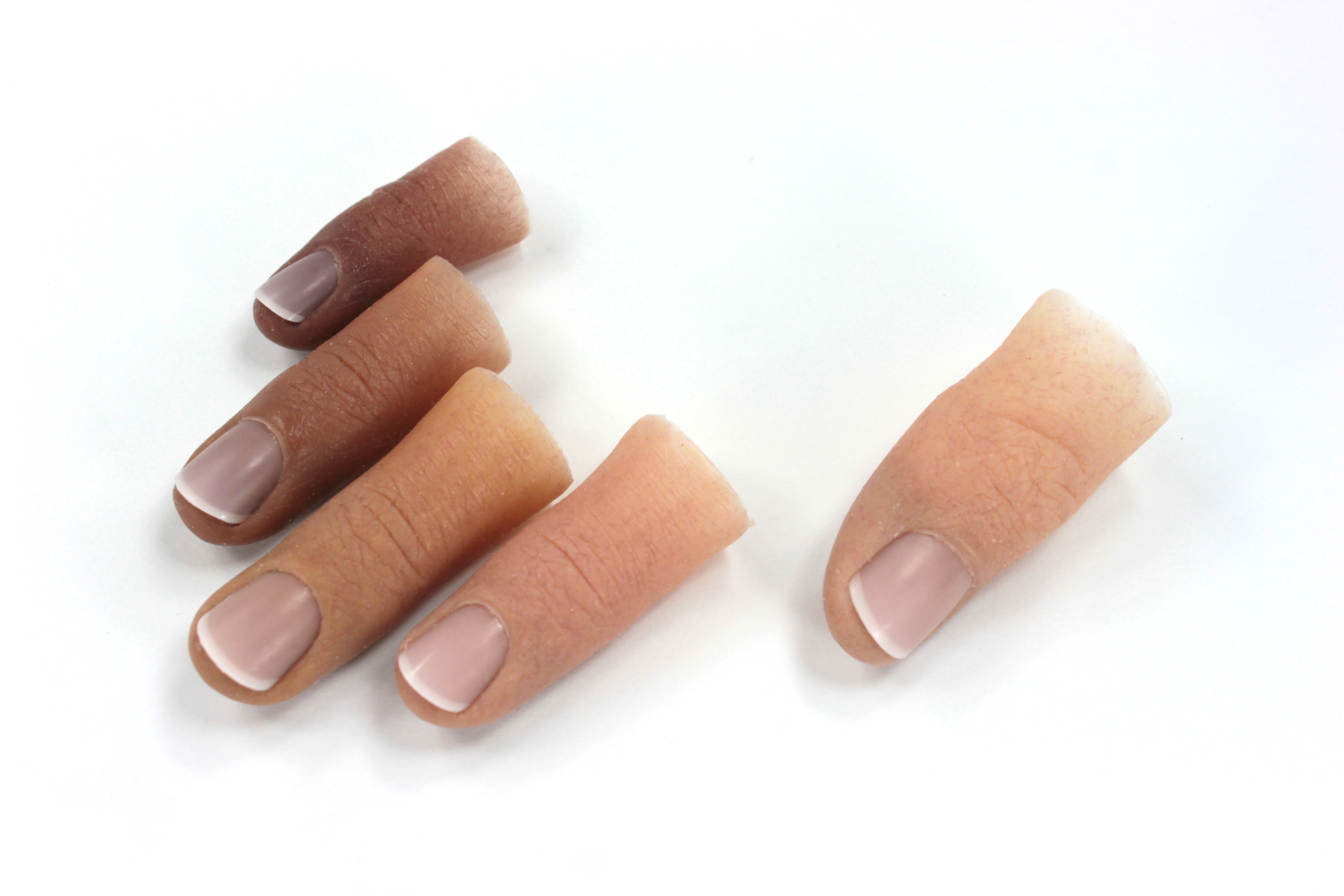
A prosthetic finger, also called a finger prosthesis, is a custom-made replacement for a finger that’s been lost to injury, illness, surgery, or a condition present from birth. Modern finger prosthetics fall into two broad categories:
- Passive (silicone) prosthetics — custom-molded, hand-painted silicone devices designed to closely match the color, shape, and texture of your natural hand. They don’t move under their own power, but they provide meaningful support for gripping and holding objects, and they restore a natural, whole appearance — the kind that lets you stop thinking about your hand and start living your life again.
- Active (robotic or body-powered) prosthetics — devices that use cables, sensors, or small motors to actively bend and grip, offering more mechanical function for those who need it, though with a more visible, mechanical appearance and additional maintenance.
For most patients, what matters most isn’t the technology — it’s getting back to the small, ordinary moments: tying a shoe, holding a coffee cup, playing with a child, or simply resting a hand on a table without a second thought. A custom silicone prosthetic finger is the most common choice precisely because it gives people that back.
Why People Search for “Prosthetic Fingers” in the First Place
Finger loss is far more common than most people realize, and no matter how it happened to you, the grief that comes with it is real and deserves to be acknowledged:
- Workplace accidents — power tools, machinery, and industrial equipment are among the leading causes of finger amputation nationwide, often happening in a split second on an ordinary workday.
- Household accidents — kitchen knives, doors, and drawers cause a significant share of fingertip injuries, frequently in the middle of a completely normal afternoon.
- Vehicle accidents — car doors and collisions are a common and often traumatic cause of finger and hand trauma.
- Vascular disease and diabetes — reduced circulation can lead to tissue loss that takes away part of the body a person has always relied on.
- Infections — sometimes a localized infection that can’t be controlled requires amputation to protect the rest of the hand, an outcome no one plans for.
- Congenital differences — some people are born without a fully formed finger and, after years of adapting, decide later in life that they want something different for how they look or how they function.
Whatever brought you to this page, the questions tend to be the same: will it look real, will it feel like mine again, and how do I even begin?
How Realistic Do Prosthetic Fingers Actually Look?
This is, by far, the question we hear the most — and it usually comes from a place of real vulnerability, not curiosity. People aren’t just asking about silicone and color-matching; they’re asking, “will I feel like myself again?” The honest answer is that a properly custom-built prosthetic finger can be extraordinarily difficult to distinguish from a natural one. That realism comes from a careful, human process:
- A detailed mold is taken directly from your hand, capturing the exact size and shape needed.
- Medical-grade silicone is layered and hand-painted to match your specific skin tone — not a generic shade off a shelf, but the actual variation across your knuckles, palm, and nail bed.
- Fine details like visible veining, knuckle creases, and fingerprint-like texture are sculpted in by hand, with genuine care and patience.
- The fingernail is shaped and finished to match the rest of your hand, right down to the natural shine and curvature.
Patients tell us, often with real emotion in their voice, that coworkers, friends, and even close family members didn’t notice the prosthesis until they were told. For many, that’s the moment it stops feeling like a medical device and starts feeling like simply having their hand back.
Is a Prosthetic Finger Just Cosmetic, or Does It Actually Function?
Both — and that surprises a lot of people, and often brings real relief. While a silicone prosthetic finger is a passive device, its custom shape and secure fit provide genuine functional benefit for everyday life: stabilizing objects while you grip them, supporting your other fingers during pinching motions, typing, holding a fork, buttoning a shirt, and generally restoring the balance and structure of your hand. Many wearers also describe a sensation similar to proprioception, where pressure and vibration transfer through the silicone to the residual limb — so the prosthesis doesn’t feel like something added on. It feels like something restored.
For patients whose work or hobbies demand stronger active grip, body-powered or robotic finger options are also available and worth discussing during a consultation, since the right choice depends entirely on your life, your goals, and what “getting back to normal” actually means for you.
How Prosthetic Fingers Are Attached
One of the biggest misconceptions — and one of the biggest sources of anxiety for new patients — is that prosthetic fingers require glue, straps, or harnesses to stay on, and might slip or fall off in public. In reality, a properly custom-fitted device attaches by suction, molded so precisely to your residual finger that it creates a secure seal and stays confidently in place through normal daily activity. You shouldn’t have to think about your prosthesis all day, and with the right custom fit, you won’t have to.
What the Process Actually Looks Like, Start to Finish
We understand that not knowing what to expect can be one of the hardest parts of moving forward. So here, in plain terms, is exactly what happens:
- Free consultation — a specialist takes the time to listen, not just examine. You’ll talk through your anatomy, your lifestyle, your worries, and your hopes, with zero pressure and zero obligation.
- Custom molding — a detailed impression is taken of your hand to capture the precise contours needed for a secure, natural-feeling fit.
- Sculpting and color matching — your prosthesis is hand-built and painted in careful layers to match your exact skin tone and unique hand details.
- Fitting and adjustments — the finished prosthesis is checked for comfort, secure attachment, and everyday function, with adjustments made until it truly feels right.
- Care and maintenance guidance — you’ll leave with clear, simple instructions for keeping your prosthesis looking and performing its best for years to come.
Because Finger Prosthetics serves the entire United States, this journey can happen wherever feels most comfortable for you. You’re welcome to visit one of our locations, or in many cases, a specialist can come directly to your doorstep — because taking this step shouldn’t be made harder by distance, mobility, or logistics.
What About Prosthetic Fingers Cost?
Let’s be honest — if you’re grieving a part of yourself and worrying about money at the same time, that’s an unfair amount to carry all at once, and it’s completely understandable if “prosthetic fingers cost” was one of the first things you searched. Here’s what we won’t do: throw a generic number at you that has nothing to do with your actual situation, your insurance, or your needs. Pricing for a prosthetic finger depends on so many personal factors — the type of device, your specific anatomy, your insurance coverage — that any number you find online is really just a guess dressed up as an answer.
What we will do is sit down with you, for free, and find out exactly where you stand. A specialist will review your case, explain your options honestly, and in many cases contact your insurance provider directly on your behalf so you know precisely what’s covered before you spend a single dollar. You deserve real clarity, not a rough estimate — and that clarity starts with a conversation, not a price tag on a webpage.
Who Is a Good Candidate for a Prosthetic Finger?
Most people who have lost part or all of a finger are candidates, no matter how the amputation happened or how long ago it was — even if you’ve spent years believing there wasn’t a good option for you. Even residual limbs that are bony, sensitive, or irregularly shaped can typically be accommodated with the right custom design; in fact, a well-fitted prosthesis often brings real comfort by shielding a sensitive residual limb from everyday friction and contact. If you’ve been carrying uncertainty about whether this could work for you, the only way to know for sure is a caring, honest evaluation with a specialist.
Getting Started
If you’ve been putting off looking into a finger prosthesis because the unknown felt like too much, please let this be your reason to take the first small step. You don’t have to have all the answers today — you just have to be willing to ask the question. Finger Prosthetics proudly serves patients across the entire USA, with the flexibility to meet you at your home, your doctor’s office, or one of our clinics, on your terms and at your pace.
Frequently Asked Questions
What is a prosthetic finger made of?
Most custom prosthetic fingers are made from medical-grade silicone, chosen for its ability to closely replicate the look, translucency, and feel of natural skin, along with its comfort and durability.
How long do prosthetic fingers last?
With proper care, most prosthetic fingers last several years before needing refinishing or replacement, depending on how heavily they’re used day to day. Regular check-ups help them stay looking and feeling their best for as long as possible.
Does insurance cover prosthetic fingers?
Coverage varies by plan, but many major insurance providers, Medicare, Medicaid, and Veterans Affairs benefits offer some level of coverage for medically necessary prosthetic devices. A specialist can gently walk you through your specific situation — for full details, book your free consultation.
Can you feel anything with a prosthetic finger?
While a silicone prosthetic finger doesn’t restore biological sensation, many wearers describe a proprioceptive effect — feeling pressure and vibration transfer through the device to the residual limb, which is often what makes it feel like part of them again rather than something separate.
Are prosthetic fingers waterproof?
Silicone prosthetic fingers generally tolerate everyday water exposure, like handwashing, well. Your specialist will provide simple, specific care instructions so you never have to worry.
Can a prosthetic finger be repaired or adjusted after it’s made?
Yes. Minor repairs, adjustments, and refinishing are common and can meaningfully extend the life of your prosthesis, so you’re never starting over from scratch.
How soon after an amputation can I be fitted for a prosthetic finger?
Timing depends on how well the residual area has healed. A specialist will gently evaluate your situation during a free consultation and let you know exactly when you’re ready to take the next step.
Will people be able to tell I’m wearing a prosthetic finger?
Most patients find that, thanks to careful color-matching and hand-sculpting, others don’t notice unless they’re told directly — and for many, that quiet confidence is the whole point.
Do I need a doctor’s referral to get a prosthetic finger?
No — any physician aware of your condition can provide the documentation needed. An initial consultation with a specialist doesn’t require a referral at all, so there’s nothing standing between you and your first conversation.
You don’t have to figure this out alone. For more information, book your appointment now — schedule your free consultation. You’re welcome to visit one of our locations, or we can come to your doorstep — we proudly serve patients across the entire USA, wherever you are. Call (800) 670-9550 to speak with a specialist who genuinely wants to help.