
One of the most common questions we hear from Chicago-area patients researching an artificial finger prosthesis is simple: should I get a silicone finger or a robotic one? Both are legitimate, well-established solutions, but they solve genuinely different problems. This guide breaks down how each works, who tends to benefit most from each option, and how to figure out which one fits your life.
The Core Difference
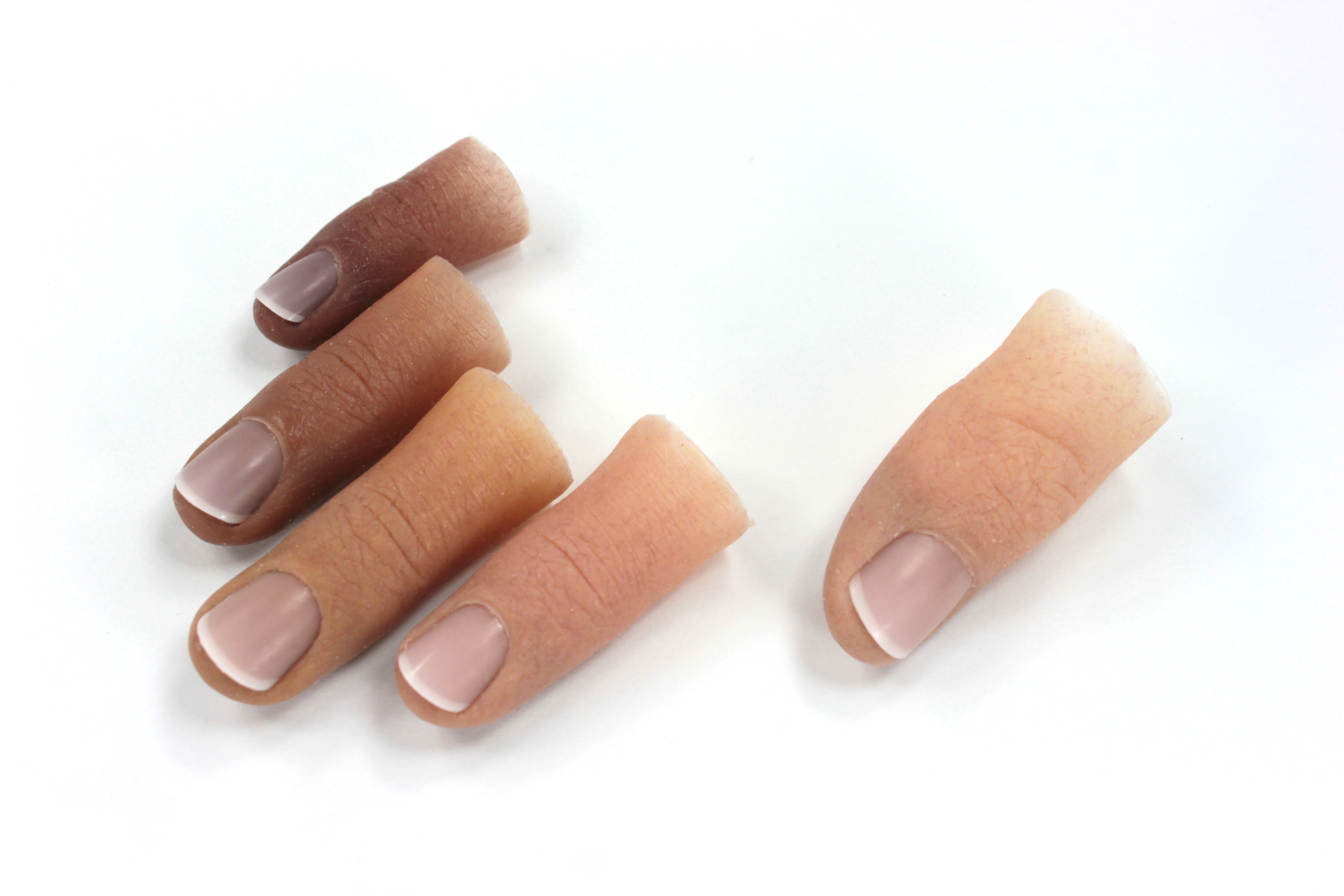
A silicone finger prosthesis is a passive, cosmetic-and-functional device custom-molded and hand-painted to match your natural hand. It restores appearance, protects the residual finger, and provides light functional support — helping you stabilize objects, type, or grip lightly — through its precise custom shape and secure suction fit. It does not have moving joints powered by your muscles or motors.
A robotic finger prosthesis (sometimes described as myoelectric or body-powered, depending on the specific design) uses cables, sensors, or small motors to actively bend and grip, giving you more mechanical function for tasks like holding tools, gripping a steering wheel, or manipulating small objects — typically with a more visible, mechanical appearance and more ongoing maintenance.
How Silicone Finger Prosthetics Work
Every custom finger prosthesis built by Finger Prosthetics starts with a detailed mold of your hand. From there, a specialist builds up the silicone in translucent layers, carefully matching your exact skin tone, the color variation across your knuckles, visible veining, and the shape of your fingernail. The result is a device that, in most everyday situations, is genuinely difficult to distinguish from a natural finger — and because it’s custom-fitted, it stays securely in place by suction without slipping during daily activities.
How Robotic Finger Prosthetics Work
Robotic and myoelectric devices use small sensors placed against the skin of the residual limb to detect muscle signals, which then trigger motors or cable systems to bend the prosthetic joints. Some designs are body-powered, using the motion of your wrist or another part of your hand to mechanically drive the movement of the prosthetic finger through a cable system, without any electronics at all. Both approaches restore a level of active grip strength that a passive silicone device cannot replicate, but they generally involve more visible hardware and more regular maintenance, including battery care for electronic versions.
Comparing the Two
| Silicone Finger Prosthesis | Robotic Finger Prosthesis | |
|---|---|---|
| Appearance | Custom-matched to your skin, nearly indistinguishable | Visibly mechanical or partially covered |
| Function | Passive support, light grip stabilization | Active bending and gripping motion |
| Sensation | Proprioceptive feedback through the residual finger | Depends on sensor type |
| Maintenance | Low — occasional refinishing | Higher — batteries and mechanical parts |
| Best for | Restoring appearance, confidence, light daily tasks | Heavy functional grip needs, manual work |
Which Do Chicago Patients Choose Most Often?
Most patients pursuing a finger prosthesis for everyday life — returning to work in client-facing roles, restoring confidence in social settings, or simply wanting their hand to look and feel whole again — choose custom silicone. It requires far less ongoing maintenance and, for the vast majority of day-to-day tasks like typing, holding objects, and shaking hands, provides all the function most people need.
Patients in physically demanding trades who need strong, repeated active grip sometimes pursue robotic options instead, and it’s not uncommon for a patient to use a functional device for work and a cosmetic silicone finger for social or professional settings where appearance matters most. There’s no universally “right” answer here — it depends entirely on your job, hobbies, and personal priorities, which is exactly what a free consultation is designed to help you sort through.
Questions to Ask Yourself Before Choosing
- How often do I need active grip strength versus passive stabilization?
- How important is appearance in my daily work and social life?
- Am I comfortable with the ongoing maintenance a robotic device requires?
- Do I want a single solution, or would I benefit from having both types for different situations?
A specialist can walk through each of these questions with you in detail during your consultation, using your specific residual anatomy and lifestyle as the basis for a recommendation — rather than a one-size-fits-all answer.
Custom Finger Prosthetics in Chicago
Finger Prosthetics serves the greater Chicago area with in-home, in-office, and doctor’s-office fittings — see full Chicago service details here. Every custom finger prosthetic begins with a mold of your hand and a detailed conversation about how you use your hands day to day, so any recommendation is based on your actual life, not a generic template.
If you’re weighing a full hand solution rather than a single digit, see our guide to partial hand prosthesis options, or if the thumb is involved, our custom thumb prosthetics guide.
Frequently Asked Questions
Is a robotic finger prosthesis worth it compared to silicone?
It depends entirely on your functional needs. If your job or hobbies require strong active grip, it may be worth exploring. If your priority is appearance and light daily function, a custom silicone finger typically delivers excellent day-to-day value.
Can I wear a silicone finger for physical work?
Yes, many patients do — silicone prosthetics are durable and suction-fitted, holding up well for light-to-moderate tasks, though very heavy manual labor may call for a more rugged or functional solution.
Does insurance cover robotic prosthetics the same way it covers silicone?
Coverage varies by plan and is sometimes more restrictive for advanced electronic devices. A specialist will verify your specific benefits for either option at no charge.
Can I switch from one type to another later?
Yes — many patients start with a custom silicone prosthesis and explore functional or robotic options later as their needs change.
How realistic does a silicone finger actually look?
Extremely realistic when custom-built — patients frequently report that family members and coworkers didn’t notice the prosthesis until they were told about it.
Do robotic finger prosthetics require batteries?
Myoelectric versions do require batteries and periodic charging; body-powered mechanical versions typically don’t, relying instead on cable systems driven by your own movement.
Can a silicone prosthesis provide any functional benefit at all?
Yes — while it’s a passive device, the custom shape and secure fit meaningfully improve your ability to stabilize and grip objects for most daily tasks.
Is the fitting process the same for both types?
The initial molding and evaluation process is similar, but robotic devices typically involve additional fittings to calibrate sensors and mechanical components.
How do I know which option is right for me?
The best way is a free, no-obligation consultation, where a specialist reviews your residual anatomy, discusses your lifestyle, and helps you weigh the tradeoffs based on your specific situation.
Not sure which option fits your life? Book a free consultation with a Chicago-area specialist, or call (800) 670-9550 to talk it through.